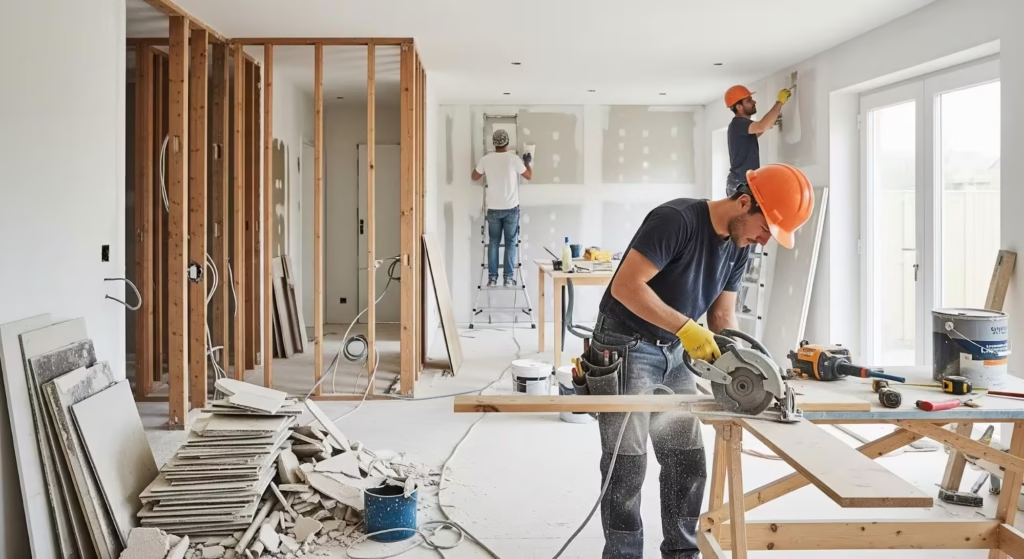
You are not alone if you are currently browsing Pinterest for kitchen inspiration or dreaming about your backyard with a glittering new pool. In Australia, renovating is more of a national sport. However, in the frenzy of choosing tiles and drawing floor plans, a question of concern always lingers in the minds of wise homeowners: the more valuable I make my home, will the government charge me more?
It’s a valid worry. In most places around the globe, property taxes depend upon the aggregate value of your home in the marketplace. The more valuable the house, the higher the bill. However, it is a slightly different system in New South Wales (NSW), and most times this is positive news for your plans to renovate.
We will deconstruct the precise effect of home upgrades on your NSW taxes to make it easy to assess the facts and myths of home upgrades and renovate with confidence.
Council Rates vs. Renovations: Understanding Unimproved Land Value
You should first find out what the taxman is looking at before you can know what your tax bill is. In NSW, local council rates and land tax are generally calculated with reference to the Unimproved Land Value (ULV), not the Capital Improved Value (CIV).
What is Unimproved Land Value (ULV)?
Suppose the hands of a giant flew down and picked your house, garage, and swimming pool out of your block to leave only the bare dirt. It is that parcel of dirt that the NSW Valuer General values.
This is because, for the vast majority of homeowners, renovating your home will not directly raise your council rates.
You might have gold-plated taps installed, or you could add a second storey or create a state-of-the-art cinema room. Although such upgrades certainly add value to your property in the market (the price that someone would pay to purchase), they do not affect the value of the land itself, which remains unimproved. When the Valuer General is deciding the value of your land to use in rating, they assume that it is vacant.
Will My Council Rates Increase After a Renovation?
Although your particular renovation will not cause an immediate jump in rates, there are still indirect ways in which your upgrades, plus those of your neighbours, can influence what you will pay in the long run.
The “Gentrification” Effect on Property Valuation
When you and all your neighbours embark on upgrading their properties heavily, the suburb becomes attractive. Nicer houses come with nicer facilities, cafes, and infrastructure. In the long run, this increases the value of land in your suburb. By the time the Valuer General revalues properties (which they normally do every three years), they may find that a vacant block of land in your now-trendy street is worth more than it used to be. This overall increase in land values may cause everyone in the region to pay more, although it is a smoldering fire as opposed to an overnight explosion.
Impact of Changing Land Use (Duplexes & Home Businesses)
The only significant exception where a physical upgrade can alter your rating category is when the use of the land is altered.
For example, by knocking a single house down to construct a duplex or dual-occupancy dwelling, what you are actually doing is adding to the level of land use density. This may lead to a reassessment or a shift in the classification of your block by your council, which can lead to an increase in total rates on the property. In the same way, should you turn the garage into a business office where you conduct business, that part of your land may be reclassified by your council and charged as business rates, which are usually calculated differently.
Investment Properties: Capital Gains Tax (CGT) and Land Tax Rules
When the premises that you are renovating is the house you are going to live in forever (that is, your principal place of abode), you will not be subjected to Land Tax or Capital Gains Tax (CGT). When you are renovating an investment property or a holiday home, however, the rules are a bit stricter.
Renovations and NSW Land Tax
Similar to council rates, NSW Land Tax is also calculated based on the land value without improvements. Therefore, it will not directly make you pay a higher land tax just because you have a nicer house on your rental block. But you should be wary when carrying out your renovations if you are purchasing adjacent land or subdividing, since this changes the land parcels themselves.
Reducing Capital Gains Tax (CGT) with Improvements
Here is where upgrades can in fact save you money—but only when you keep track of them. In the event that you sell an investment property, you are taxed on the profit (capital gain). Your renovation (capital improvements) costs are part of your cost base. An increase in the cost base implies a lower taxable profit upon sale.
Things are, however, gray between immediate deductible repairs and capital works (improvements). Misinterpretation of this may cause headaches with the ATO. Here, local knowledge will come in handy. Our advice in relation to Wollongong taxation services is that you should consider consulting professionals to make the right distinction between deductible repairs and capital improvements to ensure you do not forfeit any tax advantages once you eventually sell.
Navigating Council Approvals (DA) and Regulations
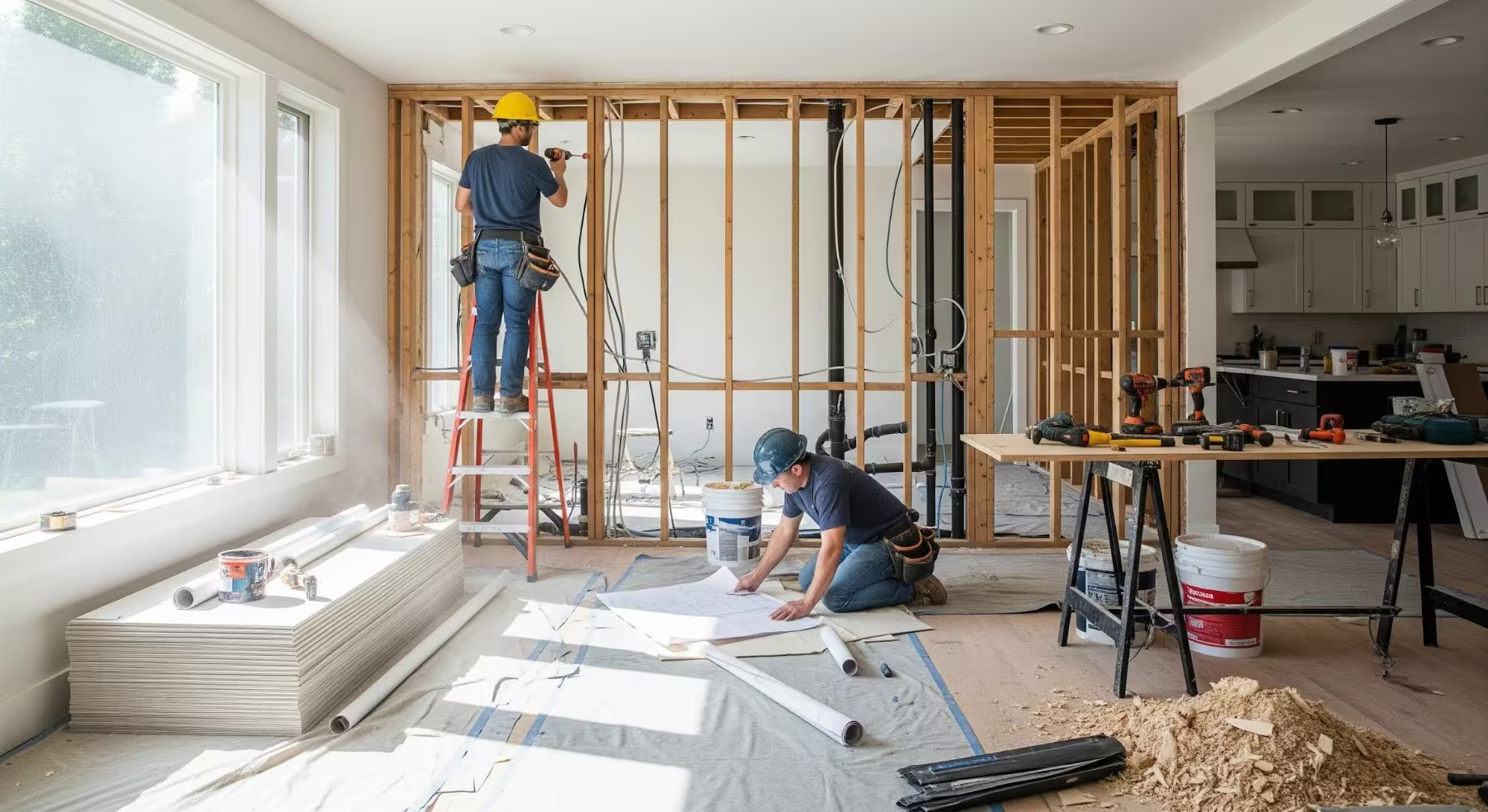
After you have worked the figures and realised that a new kitchen will not leave you bankrupt in council taxes, the fun part now follows: the construction.
Although the taxman may not be keeping an eye on you all the time, the council planning department will. Significant improvements such as extensions may need a Development Application (DA) or a Complying Development Certificate (CDC).
Engagement of professionals who are knowledgeable of the local ground, both literally and legally, is essential. Whether it be in the case of heritage regulations in an older suburb, or slope stability near the coast, professional home extension services can deal with the regulatory complexities involved on your behalf. They make sure that what you develop is compliant, safe, and can bring the value addition you are hoping to achieve.
Summary: The Verdict on Taxes and Home Upgrades
To put your mind at ease:
- Council Rates: Usually not affected by renovations because they are determined by the value of the land.
- Land Tax: Does not depend on the value of the building (depends on the land value).
- Capital Gains Tax: Renovations help to bring down your future tax bill on investment properties by increasing the cost base.
To put it concisely, the tax system in NSW is surprisingly renovation-friendly. It will not punish you with an immediate, steep tax increase on your current house upgrades. Plan that extension of your dreams, then. Long-term enjoyment (and the possible resale price of your home) will reward you, and the taxman will not be demanding a share of your labor quite so often.